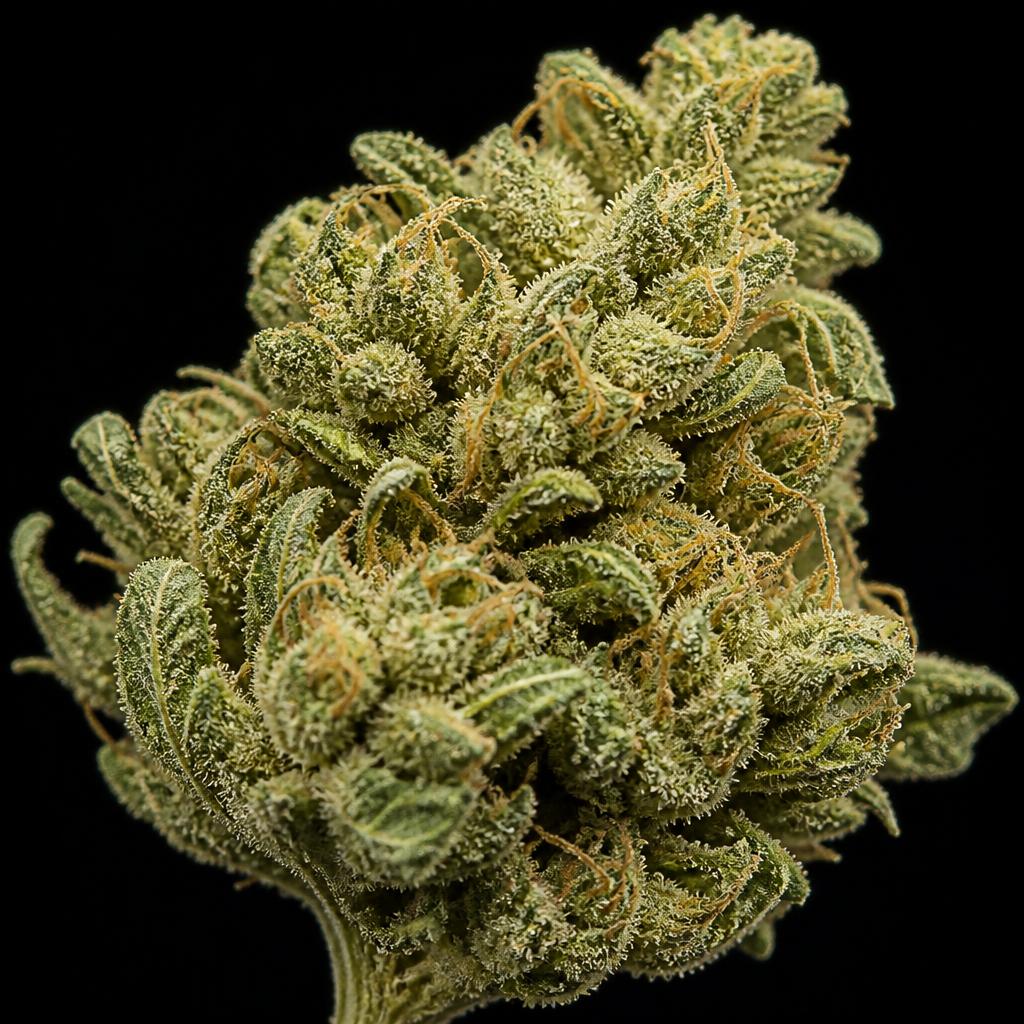
Russia · Southern Siberia / Volga basin
Russian Ruderalis
also known as Wild Hemp, Ruderalis
History & origin
A wild, auto-flowering subspecies adapted to brutal Russian and Central Asian summers. Low in THC but the source of the auto-flowering trait that underpins modern autoflower cultivars.
Traditional use
No traditional intoxicant use; hemp fibre and seed.
Place in modern medical practice
Of medical relevance primarily as a CBD/CBG source and as the autoflower parent of many balanced UK medical autos.
Evidence note
Each claim below is tagged with the strongest available evidence type. Much of the historical and traditional record is ethnobotanical rather than clinical-trial grade. Modern UK prescribing of cannabis-based medicinal products is governed by the MHRA and guided by NICE NG144; individual suitability is decided by a specialist clinician. Nothing here constitutes medical advice.
Primary sources · 2
[1]Original botanical description of Cannabis ruderalis as a distinct taxon.
Janischevsky DE. Forms of Cannabis sativa L., as influenced by environment. Bulletin of Saratov University, 1924.
Peer-reviewed study[2]Genetic positioning of ruderalis within Cannabis chemotaxonomy.
Hillig KW. Genetic and chemotaxonomic diversity in Cannabis sativa. Genetic Resources and Crop Evolution, 2005.
Peer-reviewed study
Influence on modern strains
Parent of every modern autoflower including Lowryder, and most CBD-rich autos used medicinally.
Direct descendants
Sensory profile
Aroma
Hay, fresh hemp, faint citrus
Flavour
Grass, hemp seed
Effects
Minimal psychoactivity; physically calming at higher doses