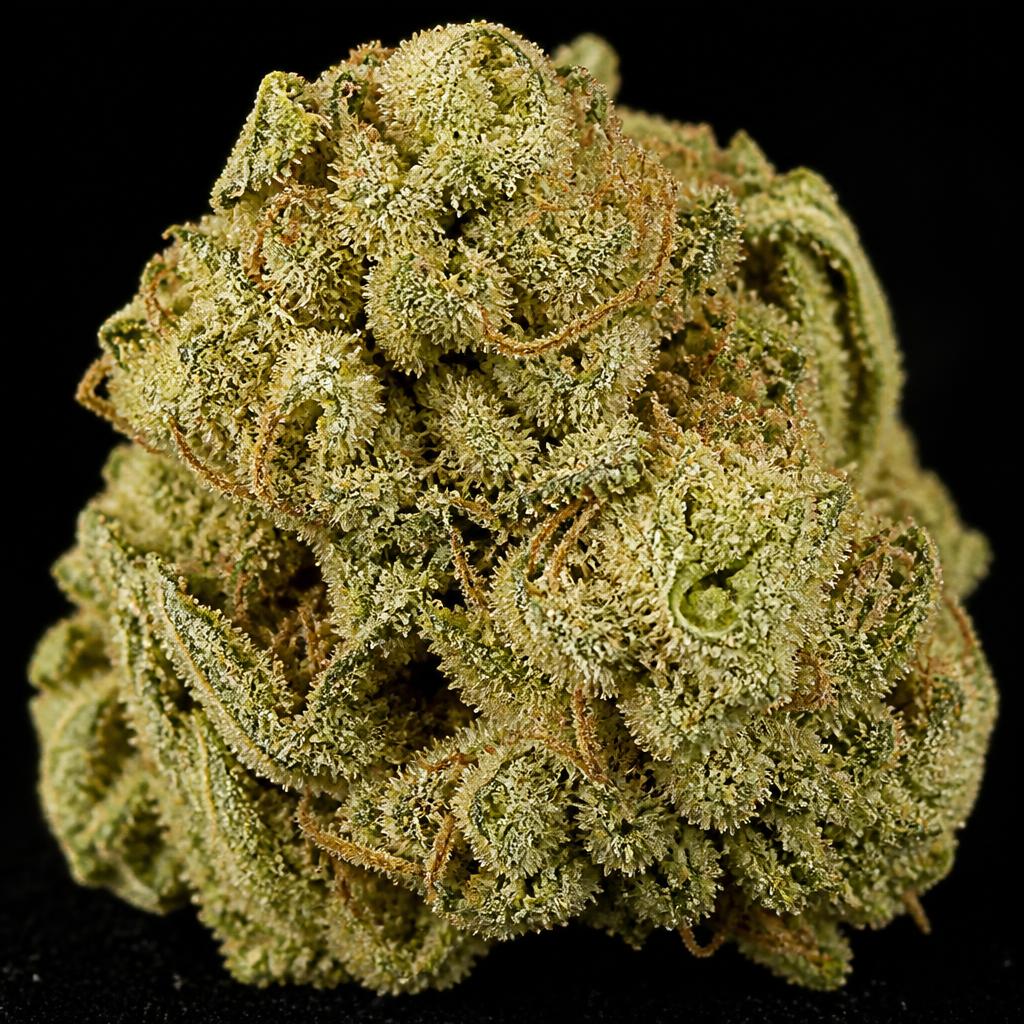
Afghanistan · Hindu Kush mountain range
Hindu Kush
also known as Pure Kush
History & origin
A pure indica adapted over millennia to the rugged Hindu Kush. Western collectors first carried seed home in the 1960s–70s along the Hippie Trail, and it became foundational to virtually every modern indica.
Traditional use
Hand-rubbed into charas resin for ritual and recreational use across Afghanistan and northern Pakistan.
Place in modern medical practice
Traditionally used by villagers as a sedative, sleep aid and analgesic for the body strain of mountain labour. In modern UK clinics its descendants are widely prescribed for chronic pain, insomnia and muscle spasticity.
Evidence note
Each claim below is tagged with the strongest available evidence type. Much of the historical and traditional record is ethnobotanical rather than clinical-trial grade. Modern UK prescribing of cannabis-based medicinal products is governed by the MHRA and guided by NICE NG144; individual suitability is decided by a specialist clinician. Nothing here constitutes medical advice.
Primary sources · 3
[1]Traditional use of Afghan indica landraces for charas production and as a sedative.
Clarke RC, Merlin MD. Cannabis: Evolution and Ethnobotany. University of California Press, 2013.
Ethnobotanical[2]Evidence for cannabinoids in chronic non-cancer pain (relevant to indica-dominant descendants).
Whiting PF, Wolff RF, Deshpande S, et al.. Cannabinoids for Medical Use: A Systematic Review and Meta-analysis. JAMA, 2015.
Systematic review[3]UK clinical position on cannabis-based medicinal products for chronic pain and spasticity.
National Institute for Health and Care Excellence. Cannabis-based medicinal products (NG144). NICE Guideline, 2019.
Clinical guideline
Influence on modern strains
Direct parent of Northern Lights, Master Kush, OG Kush and most "Kush" cultivars on UK formularies.
Direct descendants
Sensory profile
Aroma
Earthy sandalwood, hashish, pine
Flavour
Sweet earth, spice, dark wood
Effects
Heavy body relaxation, deep sedation